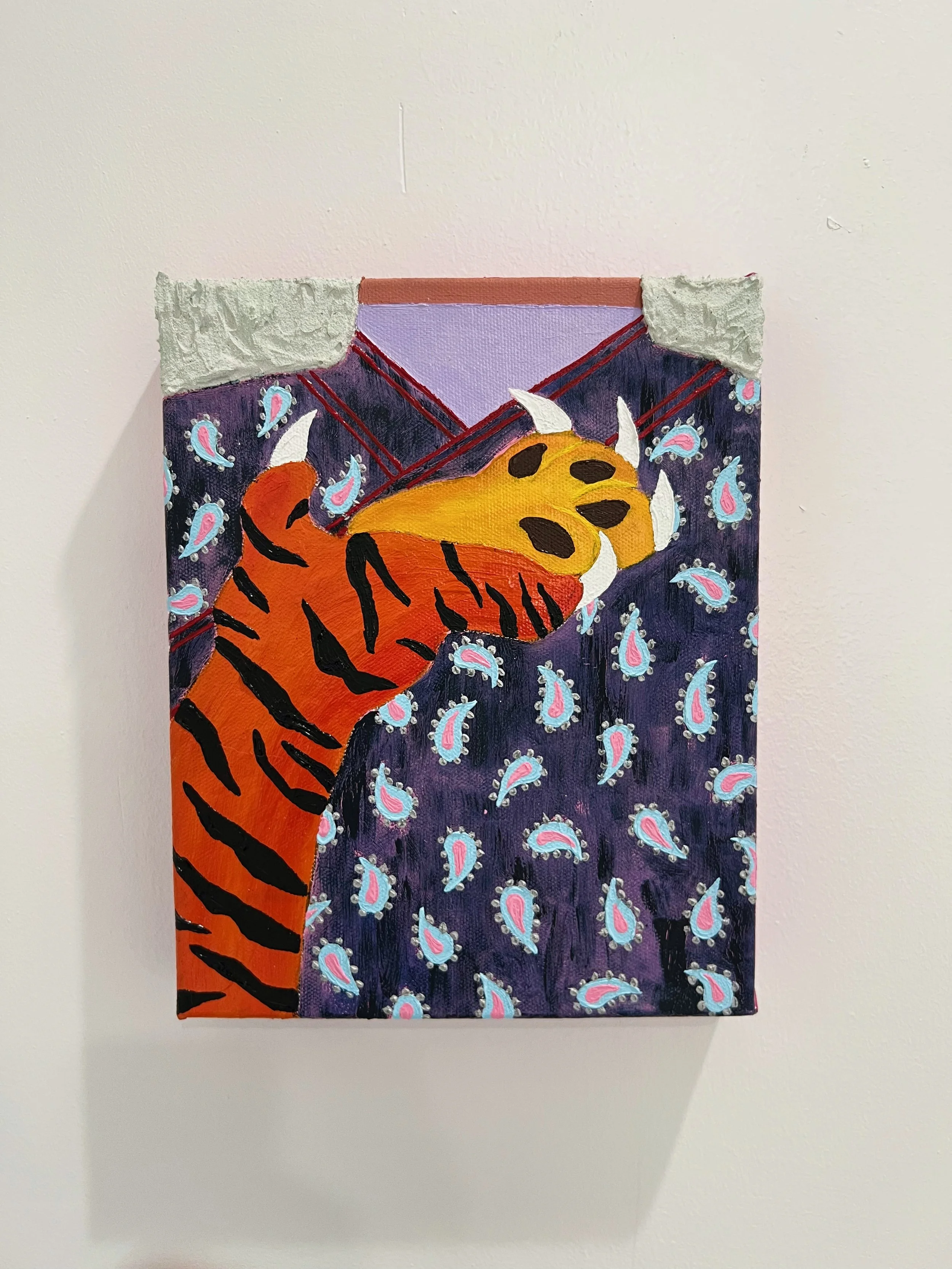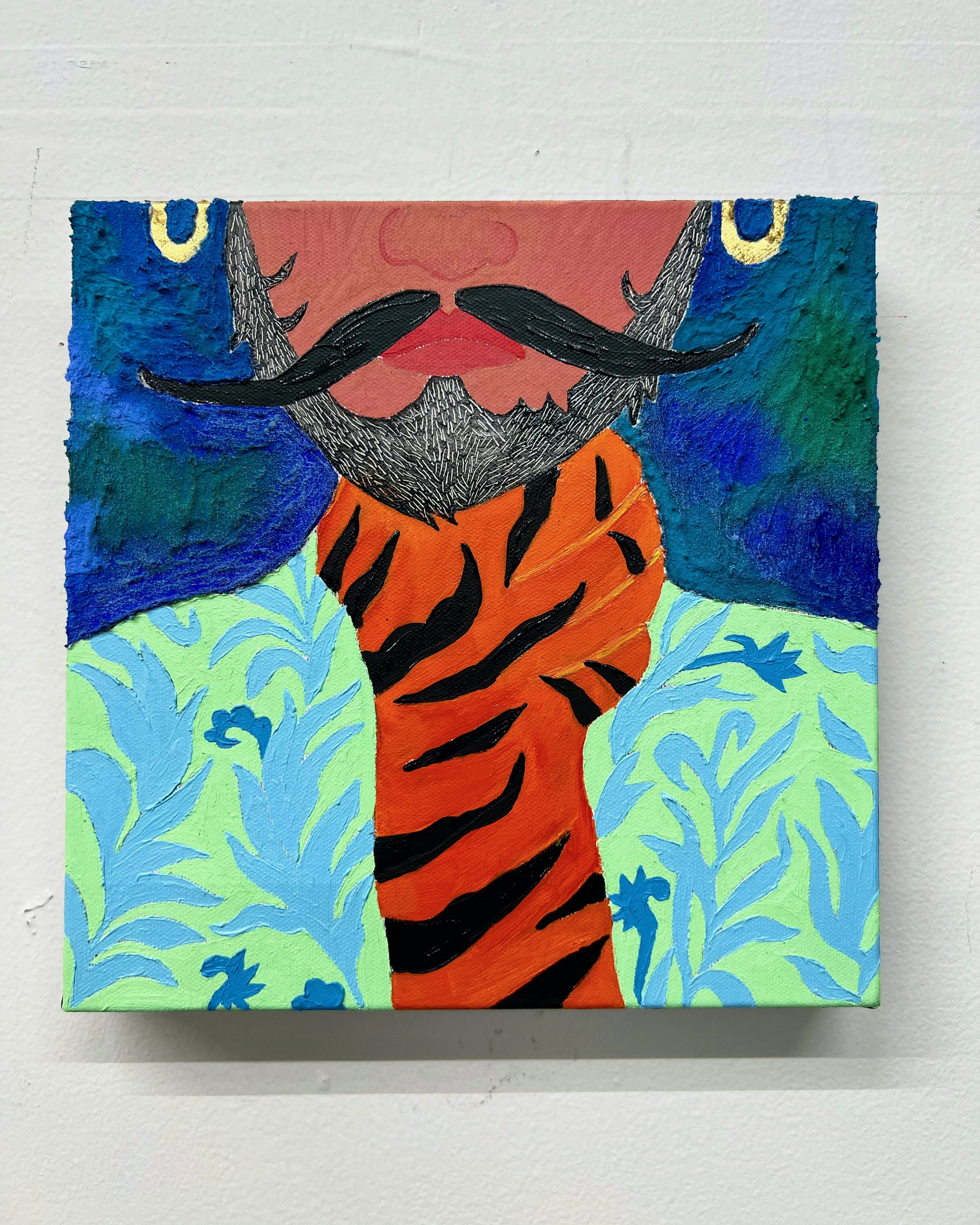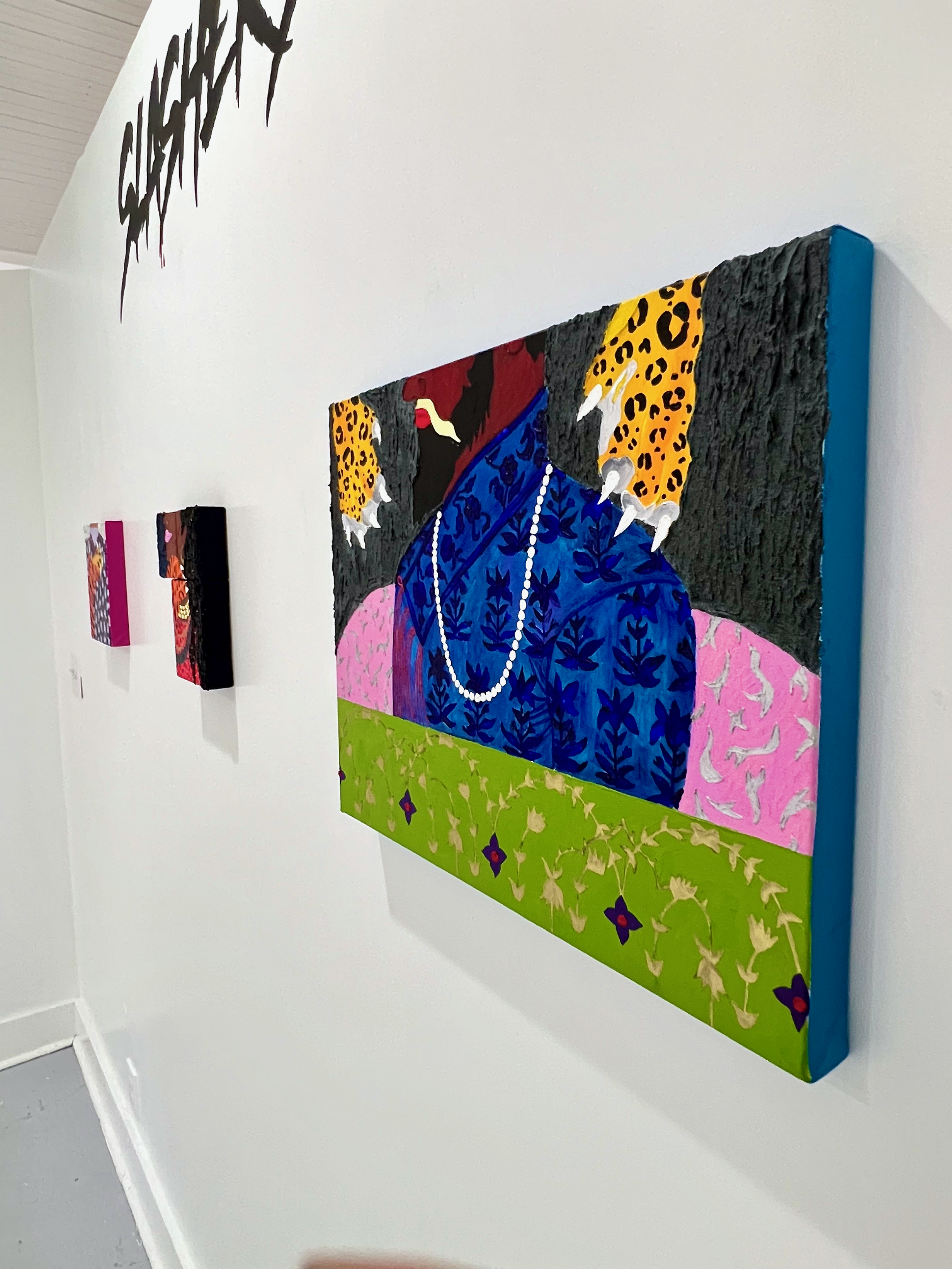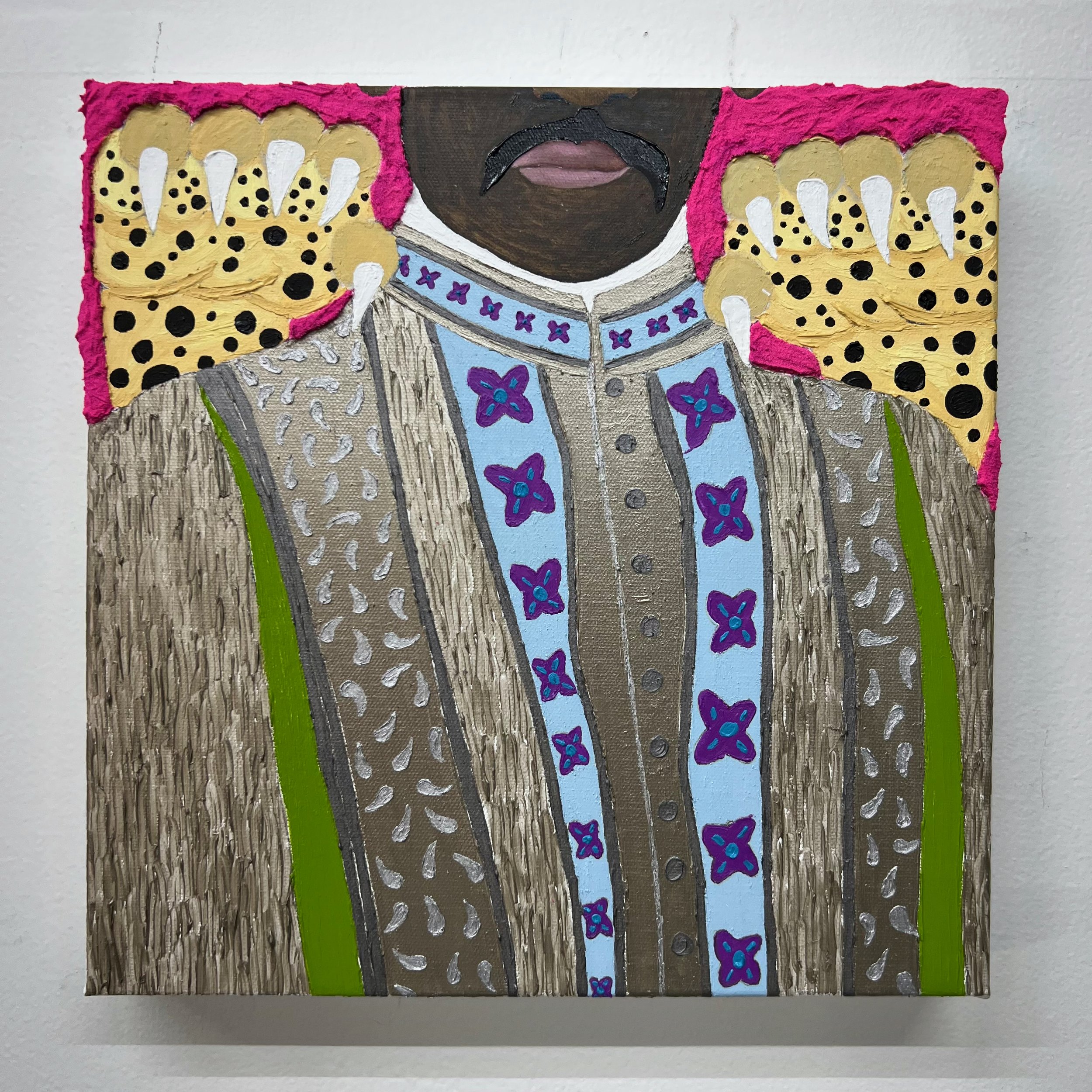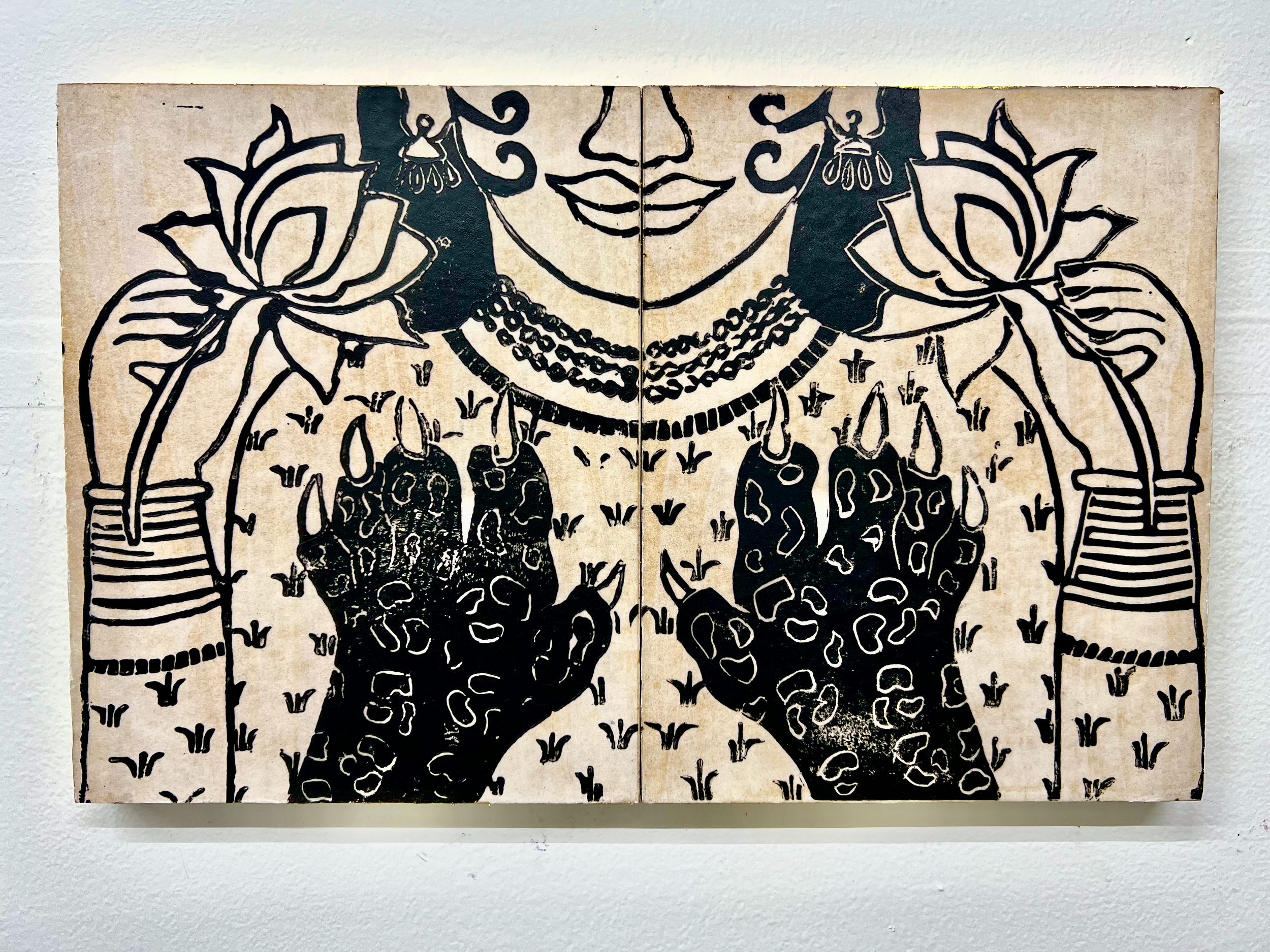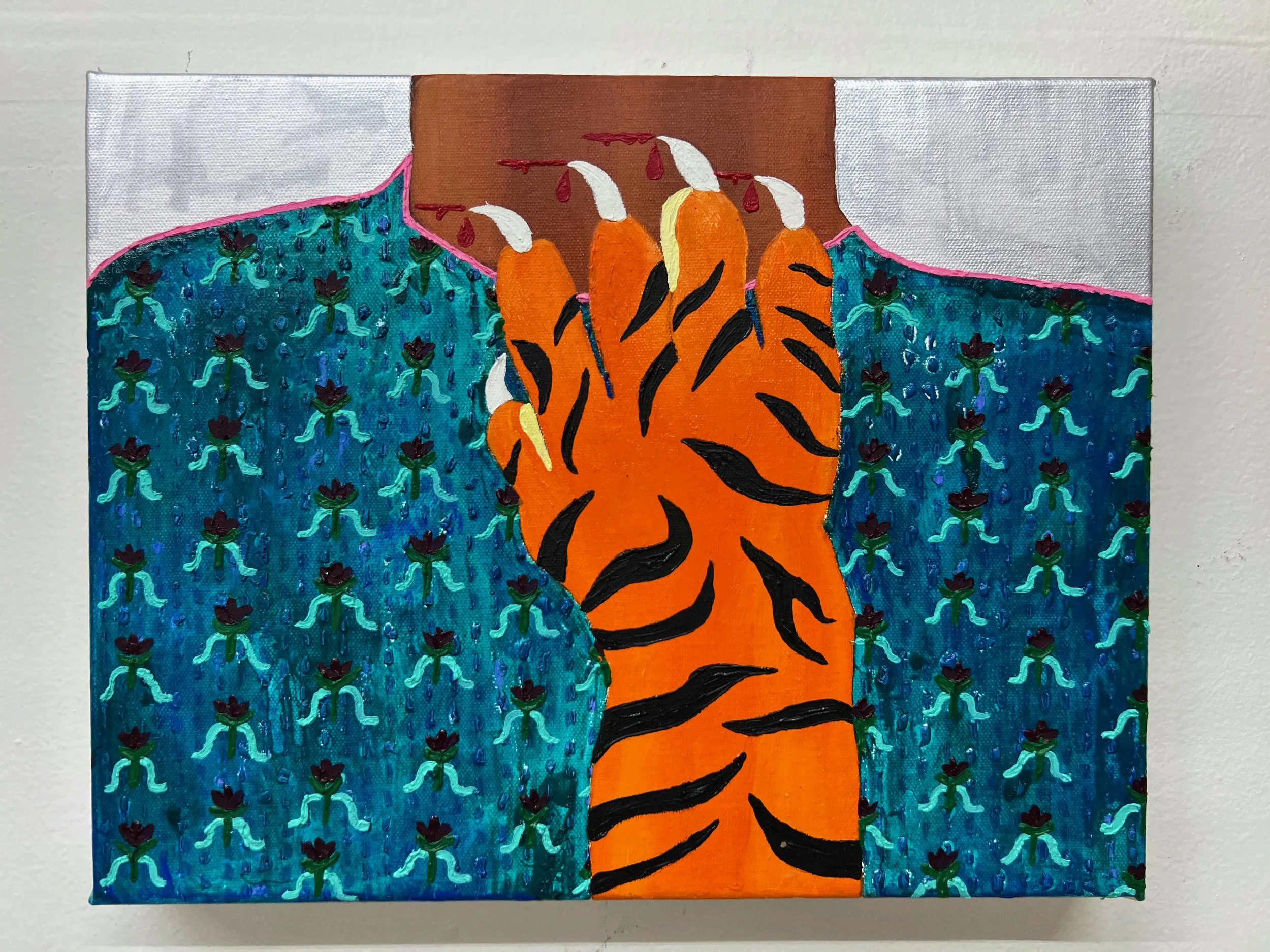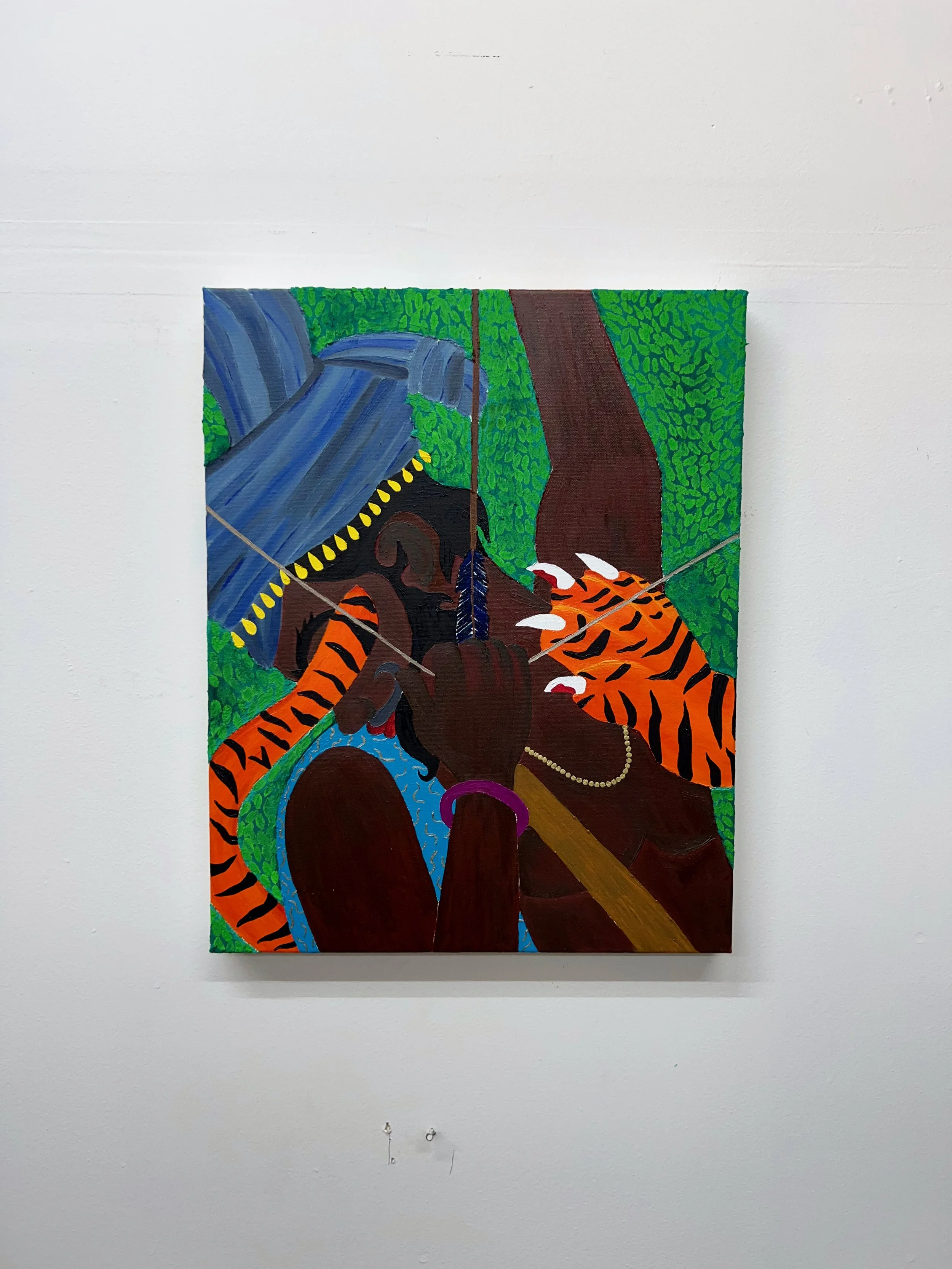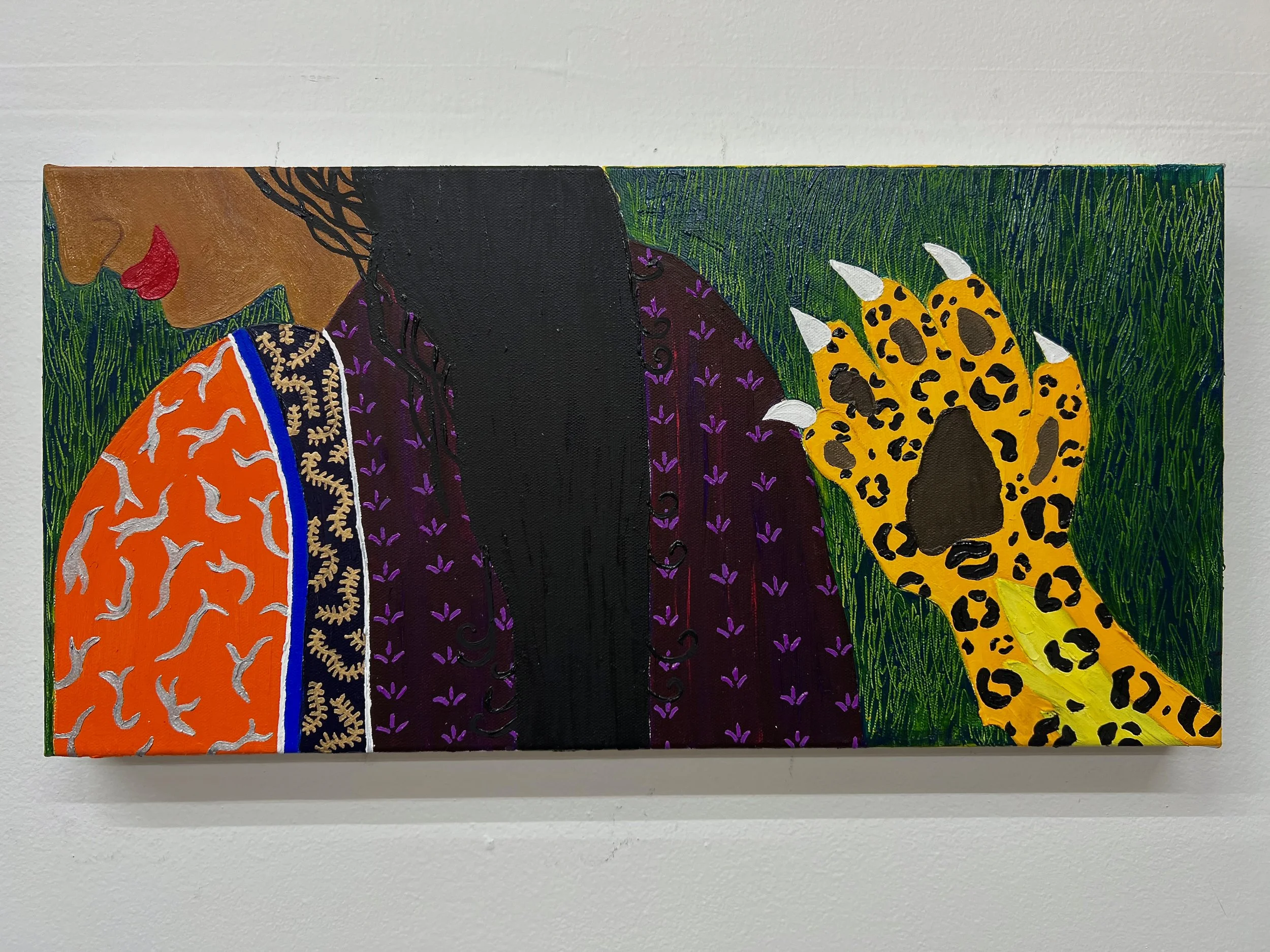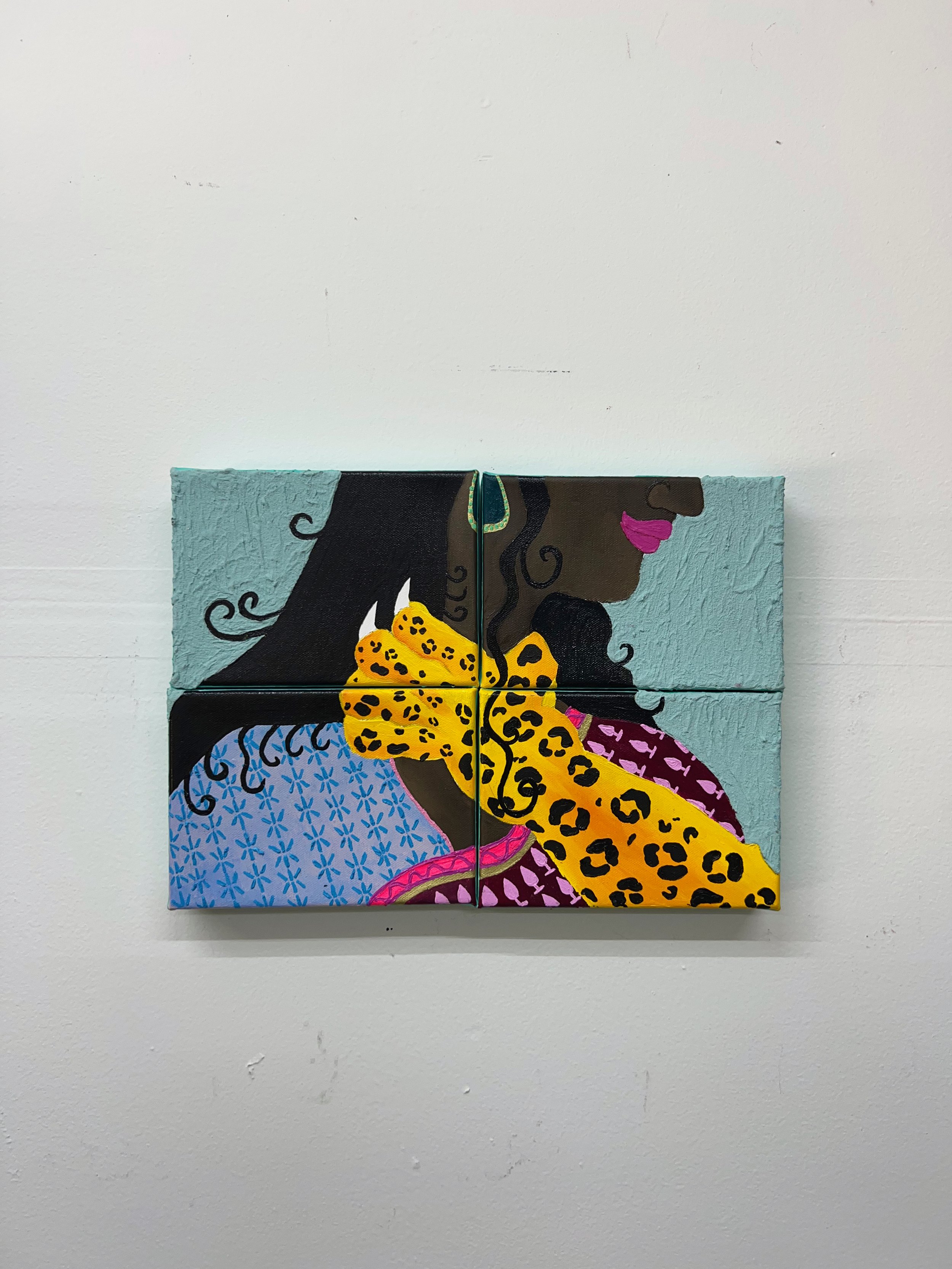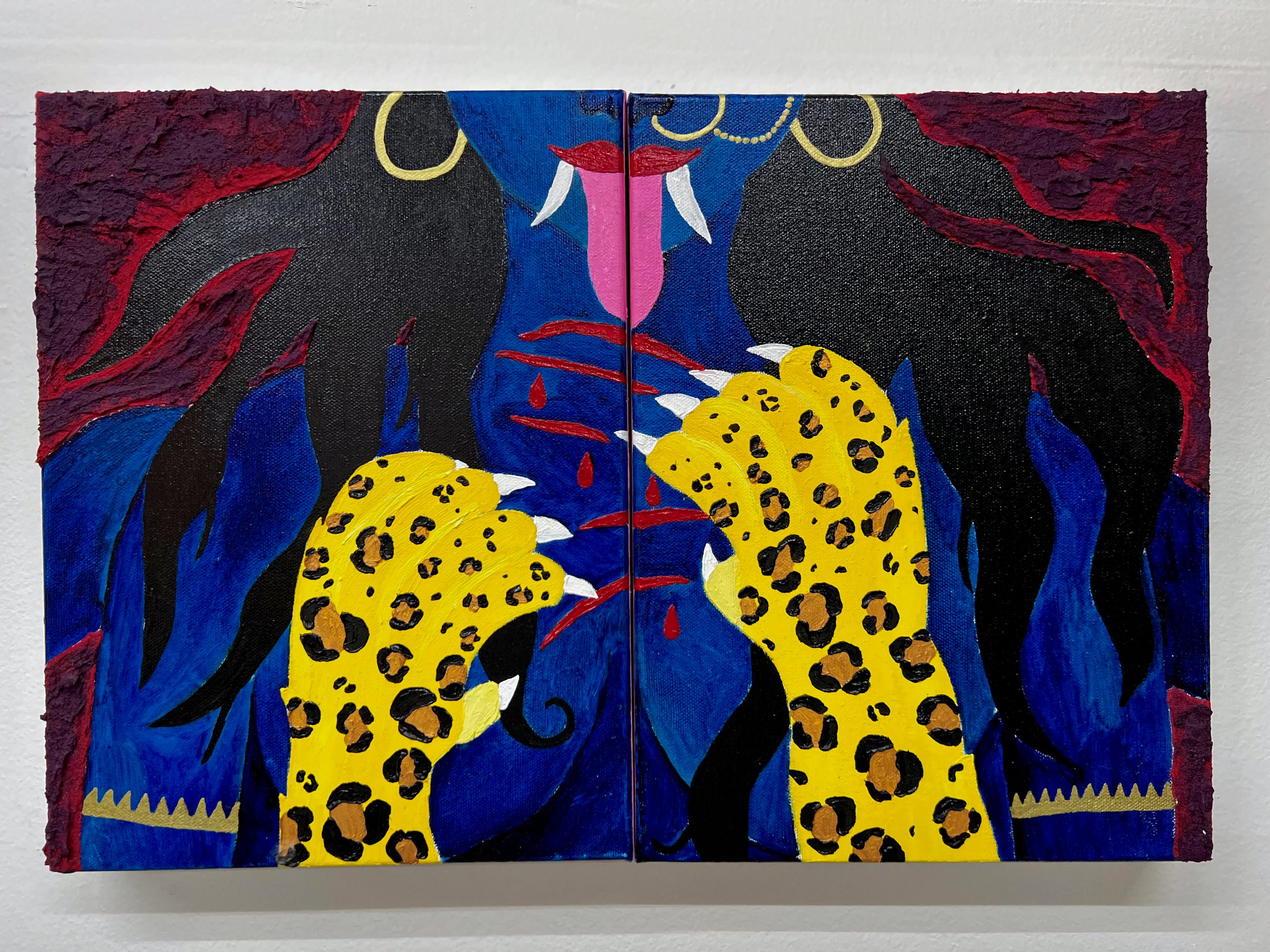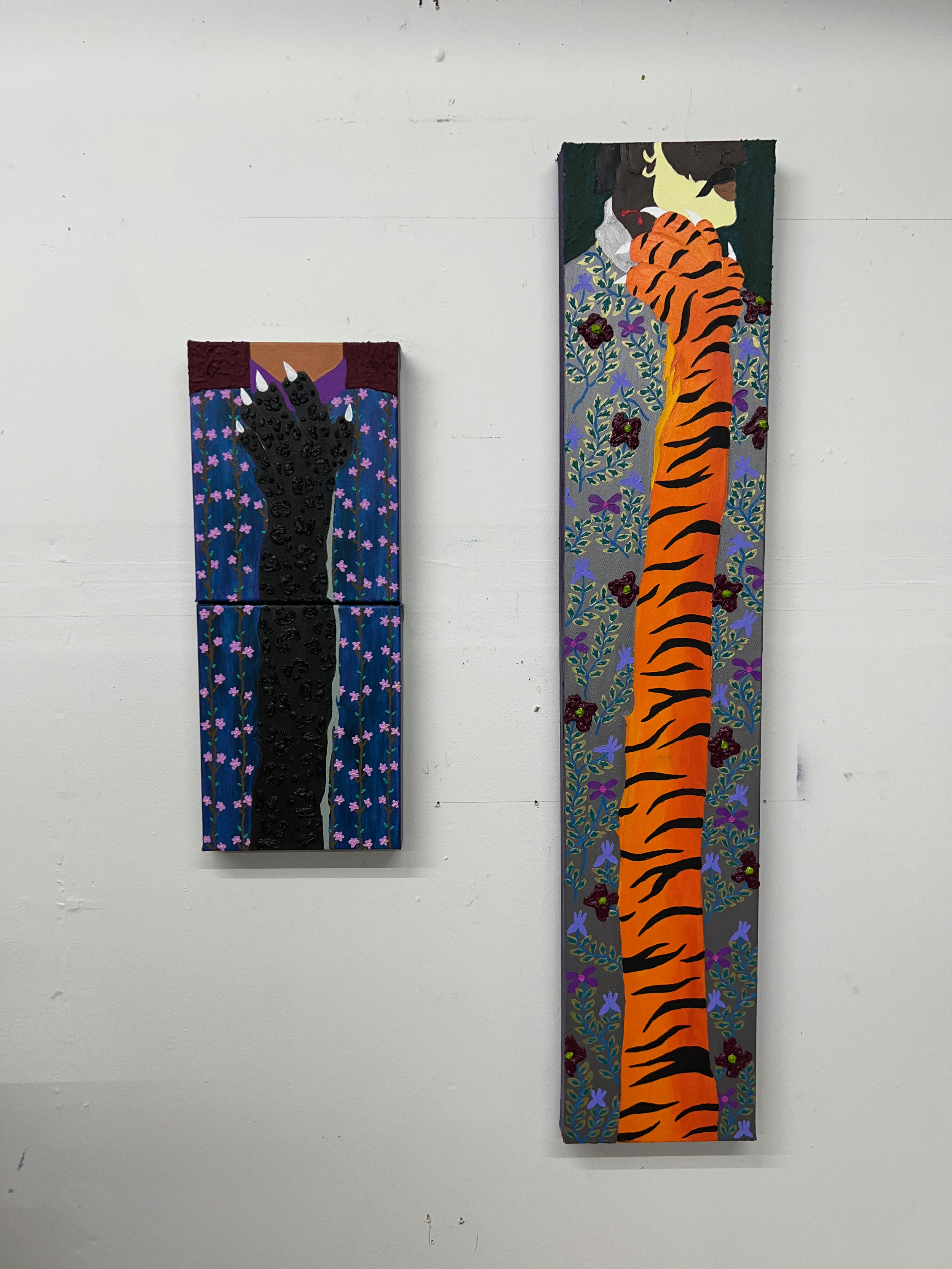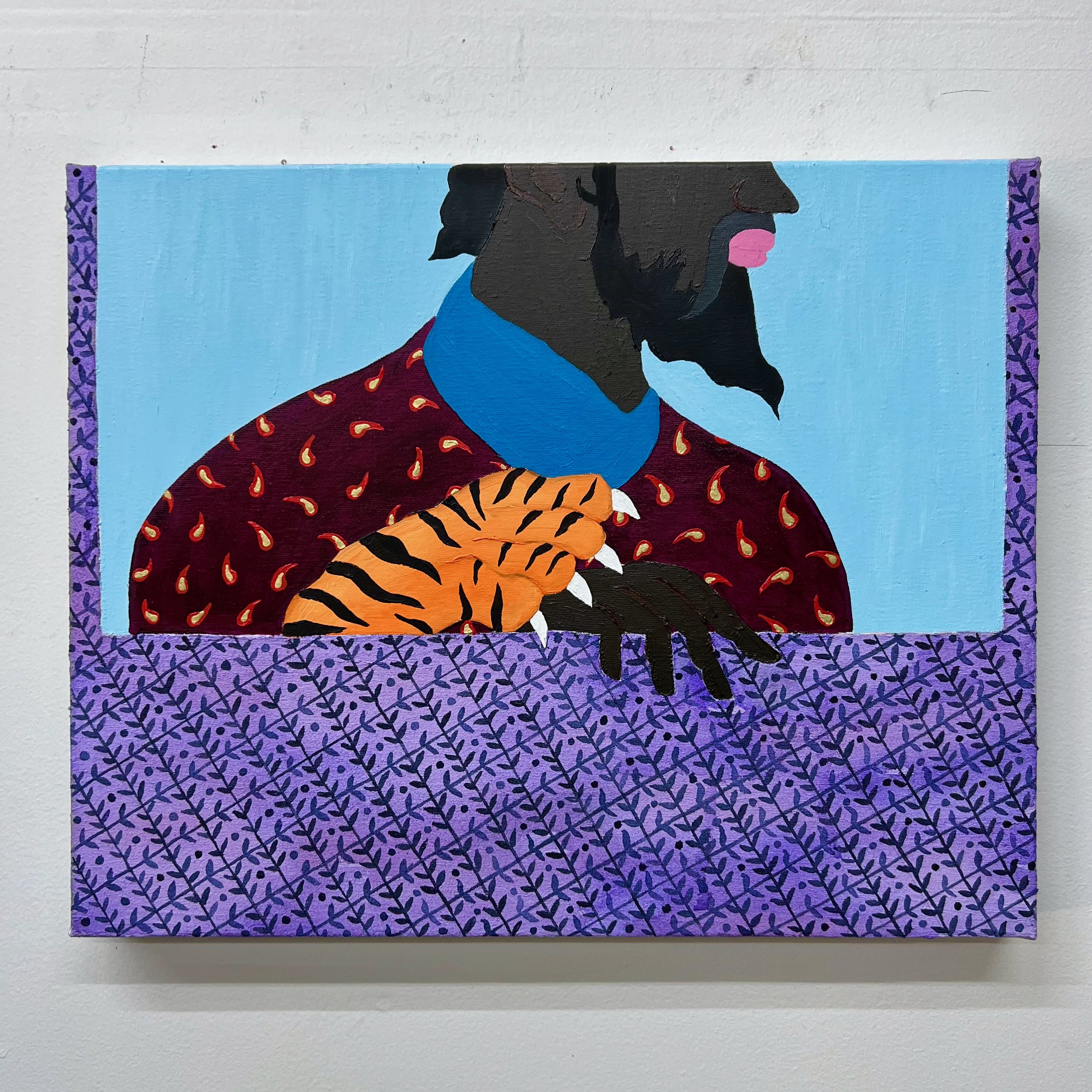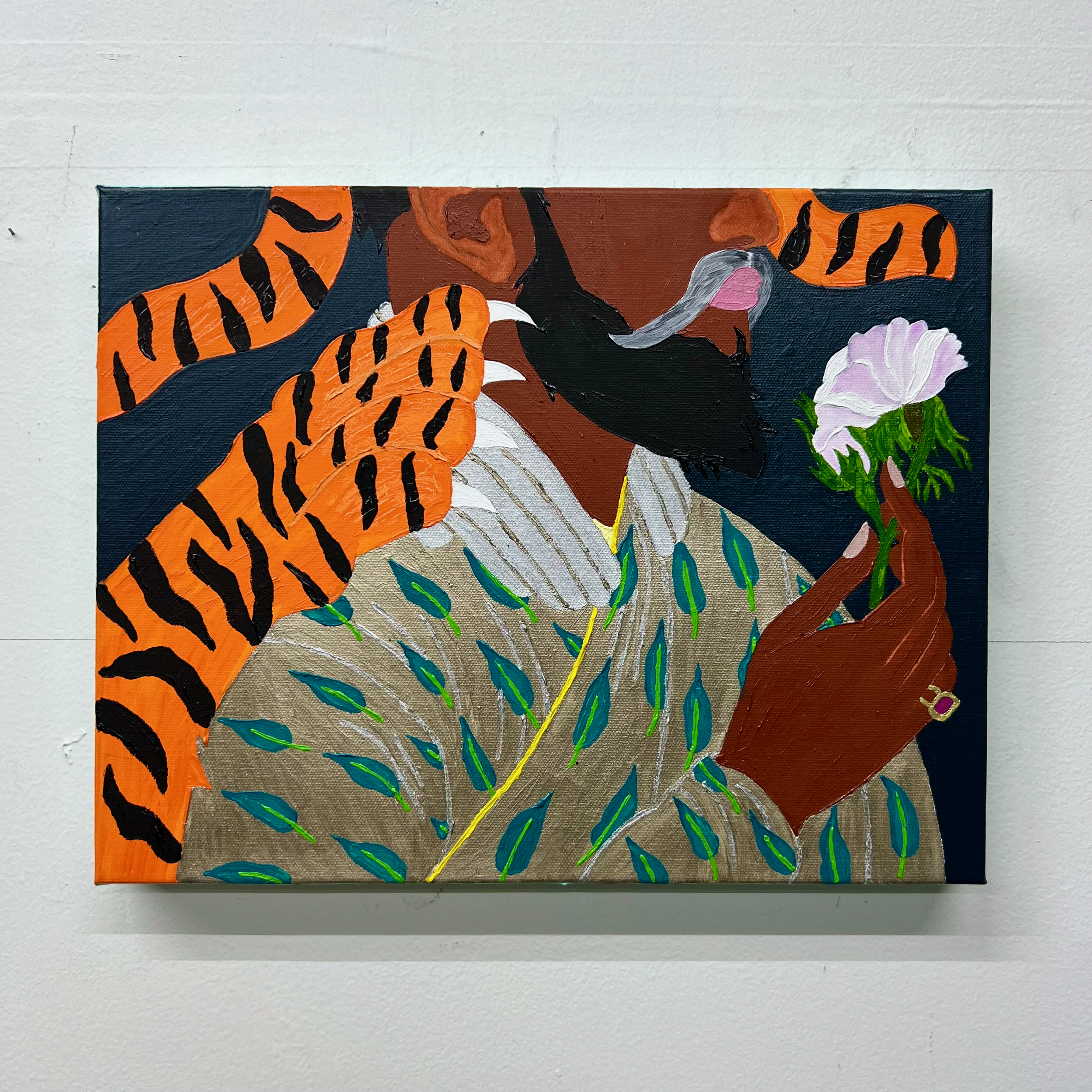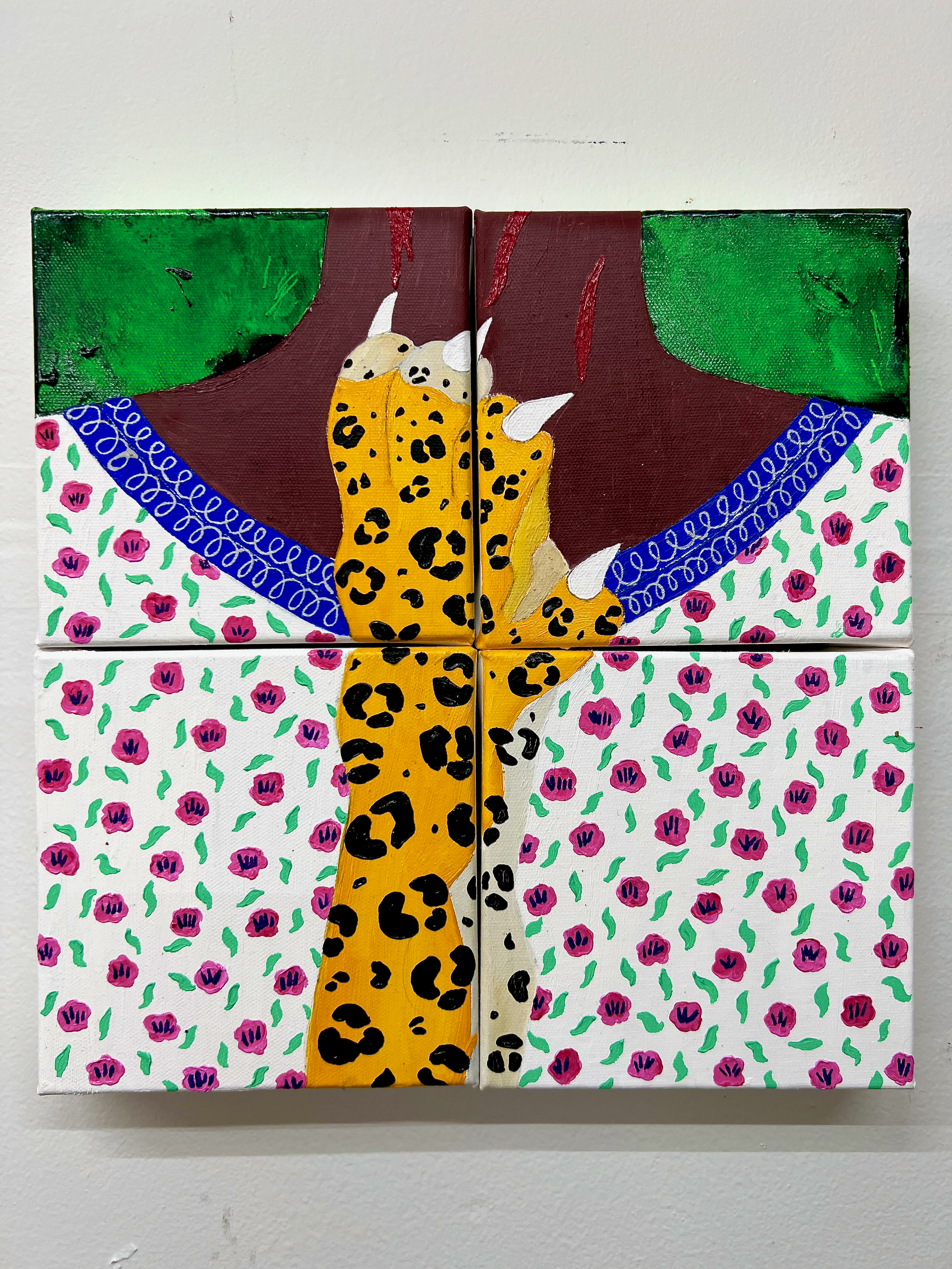
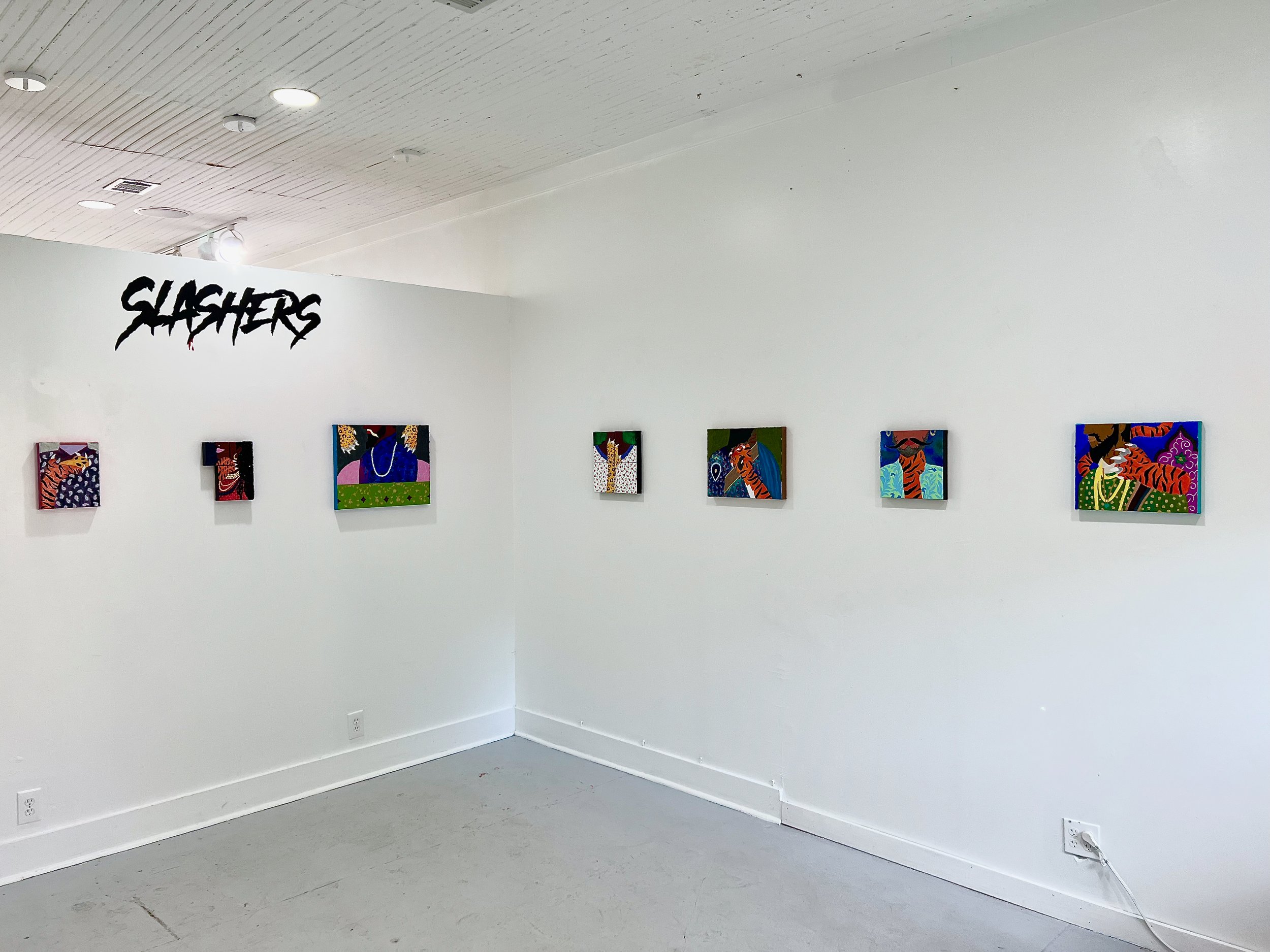
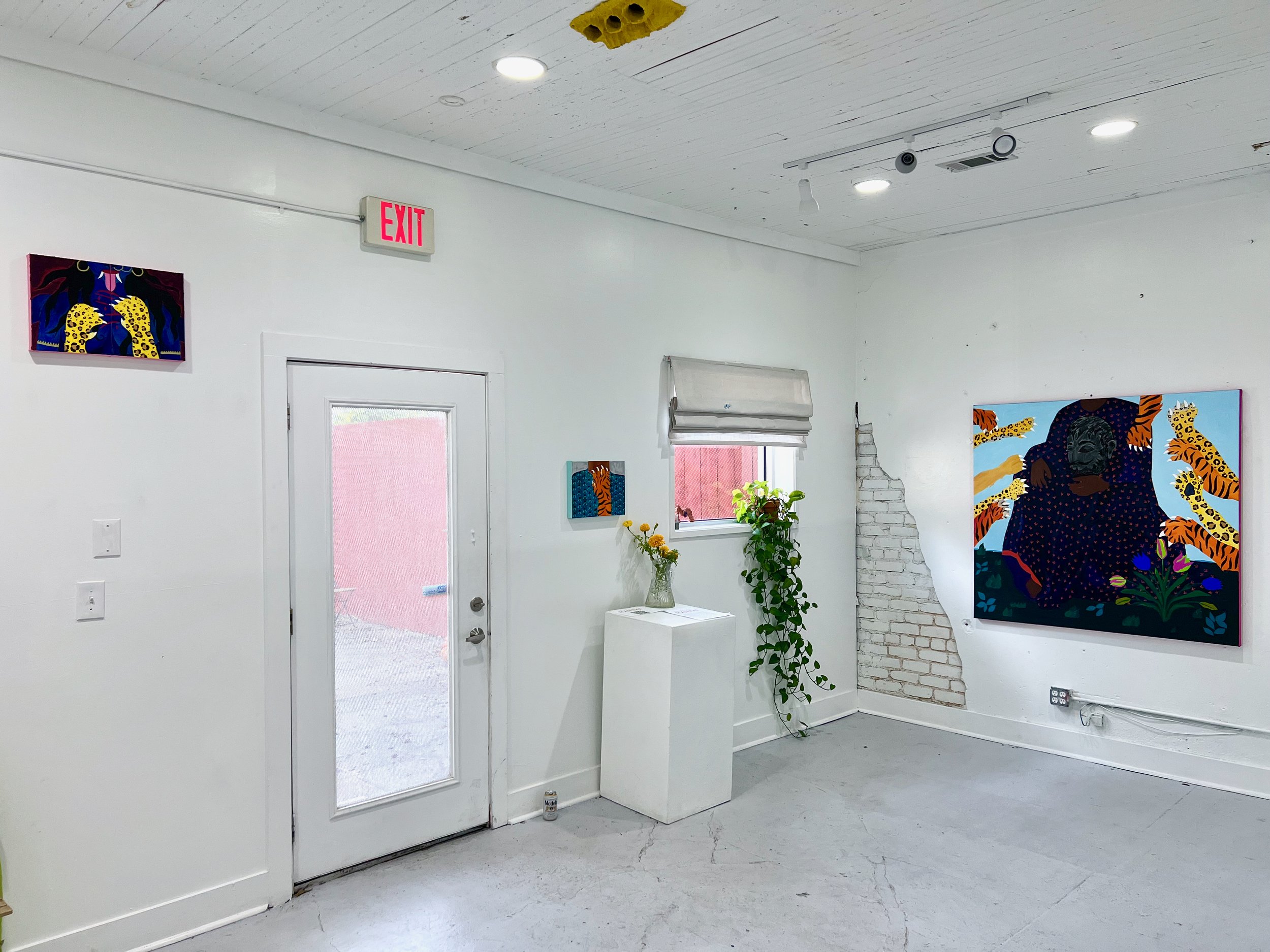
This portrait series draws on the aesthetic and psychological tension of late 1970s and 1980s low-budget “slasher” horror films, fused with the visual languages of Mughal portraiture and traditional Indian textiles. The compositions echo a familiar cinematic moment: the suspenseful, tightly framed shot of a killer’s raised arm, weapon poised just before it slashes its next victim.
In these works, jungle cats take the place of the slasher, embodying both predator and symbol. Their presence references the legacy of colonialism and imperialism, the periods when European monarchies commonly used these animals in heraldry, coat of arms, and royal family crests to project power and dominance.
Rendered on small canvases, the portraits feature deliberately cropped torsos, focusing on the neck. This framing introduces a visceral sense of vulnerability and desire, evoking themes of lust, kink, and power dynamics. At the same time, the intricate patterns within the compositions explore the intersections of nature, ornamentation, and authority.
Beneath the surface, the series also gestures towards the contemporary issue of wildlife habitat loss. As global warming and urban and agriculture expansion continue, wildlife habitats continue to dwindle across the world making human-animal conflict much more common and raising urgent questions about coexistence, survival, and the cost of dominance.
The Slasher Portraits